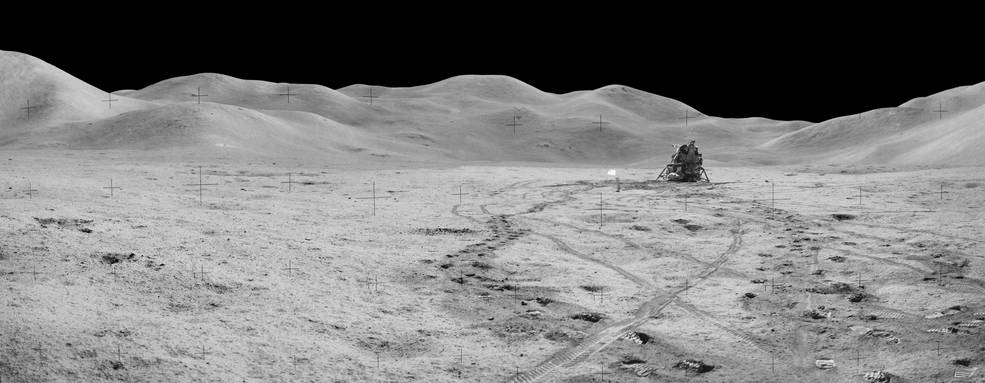



There’s a new space race to the Moon, and this time the ambitions are not just to visit but to stay. NASA’s Artemis program aims to establish a long-term human presence on the lunar surface in the 2030s. China, India, Japan and a number of private companies all have lunar mission programs of their own.
As of now, the human footprint on the Moon is small. That could change with the planned increase of lunar missions.
National space agencies are focused on science and exploration, while private companies aim to develop a lunar economy – potentially with mining operations. In the coming years, these groups will test technology and build some initial infrastructure on the Moon. From 2030 onward, Moon bases could become a reality.
But what are the long-term consequences of lunar missions for the Moon itself? The Artemis program’s goals are sustainable exploration and setting up a sustainable presence on the Moon. However, sustainability is a broad concept with a variety of definitions and uses when it comes to space exploration. As a sustainability scholar, a space systems engineer and a planetary scientist, we’ve been trying to pin down what sustainability means in a lunar context.
The delicate lunar environment
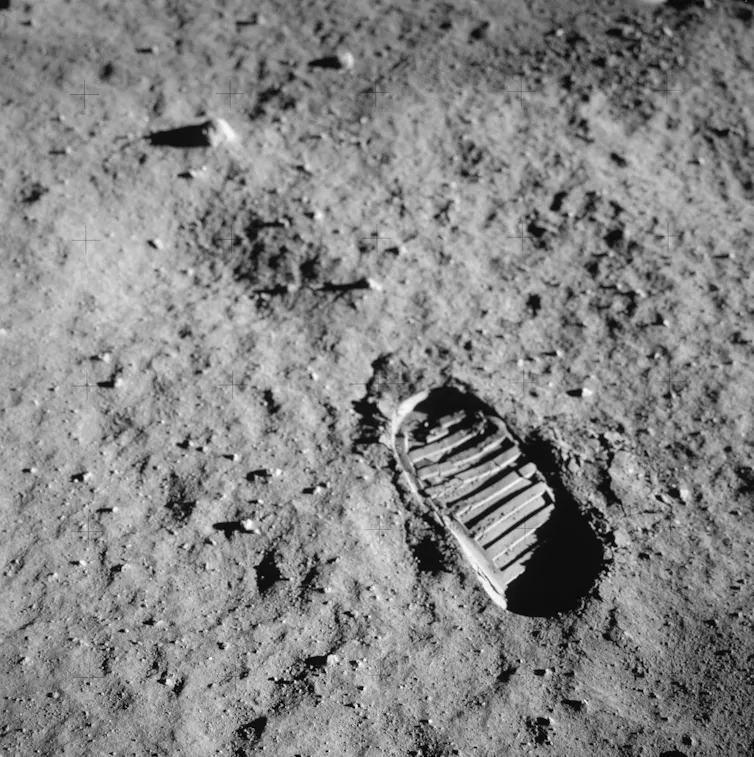
Unlike Earth, the Moon has no biodiversity, climate as we typically think of it, or oceans. But it does have its own active environment. While the Moon may seem unchanging and indestructible, it is surprisingly sensitive to human activity. Without the wind, water or other natural forces that reshape the Earth, things that happen on the Moon tend to leave a mark – sometimes for thousands, or even millions, of years.
When a rocket lands on the Moon, its engines blast the surface with exhaust gases and send fine dust particles flying at enormous speeds. A single landing by a large modern spacecraft, such as SpaceX’s Starship, could disturb an area of the lunar surface two to five times larger than the Apollo missions did in the 1960s and 1970s.
Some of those ejected dust particles can travel tens of miles across the surface, and the finest grains can reach the Moon’s orbit, potentially threatening other spacecraft. Images from satellites in lunar orbit show that changes to the uppermost layer of the surface from a single landing can remain visible for decades.
Landings can also release water vapor, carbon dioxide and other gases into the lunar exosphere – an extremely thin layer of atoms hovering above the surface – and create a temporary atmosphere.
And all these effects can come from just one mission. Future missions will focus on the polar regions, which have ideal spots for collecting solar energy atop peaks, as well as water in the form of ice in craters. Scientists don’t yet understand what the cumulative effects of the dozens of missions planned over the coming decade on the lunar environment – its surface, its thin atmosphere and its scientifically precious polar regions – will be, and whether they’re reversible.
NASA
The concept of sustainability
On Earth, the concept of sustainability balances protecting the environment, maintaining economic well-being and caring for society – current as well as future generations.
But what does sustainability mean on the Moon? To find out, we sent out a survey asking people with a demonstrated interest in space and lunar exploration to define sustainability in this new context. We received 277 complete responses from academics, space industry professionals, space agency staff and engaged members of the public.
We found that people mean very different things when they talk about lunar sustainability – and those differences often track closely with who they are and where they work.
People working in the space industry tended to think about sustainability in financial and operational terms: keeping missions affordable, making infrastructure reusable, and developing the Moon’s resources to support a self-sustaining economy.
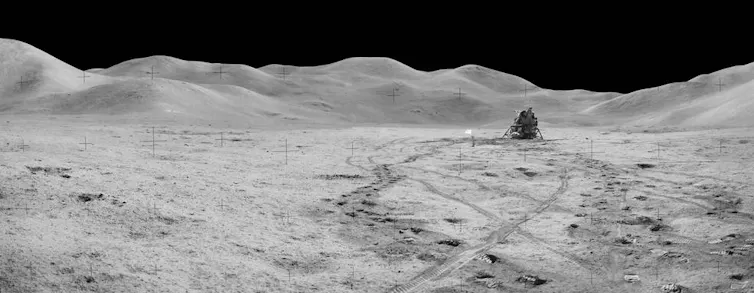
Academics, on the other hand, related lunar sustainability to environmental and ethical concerns more frequently. A significant portion of all respondents – roughly 1 in 5 – were opposed to large-scale human activity on the Moon altogether. Their responses echoed a “leave no trace” philosophy: Don’t disturb natural conditions, don’t commercialize what belongs to all of humanity, and don’t plant flags in places that shouldn’t be owned.
The majority of respondents fell somewhere in between, calling for a careful balance of scientific, commercial and environmental interests.
NASA
A continuing conversation
This diversity of perspectives on what sustainability means on the Moon is not a surprise. Even for the Earth, people do not have a universally agreed-upon perspective.
However, the shared cultural significance of the Moon calls for conversations between many groups of people, from space agencies to communities living near rocket launch sites, and from space industry professionals to amateur lunar enthusiasts.
The Moon has always been Earth’s closest celestial companion in our planet’s journey through space. As it becomes a destination for space agencies and some companies, the decisions made now will shape what the lunar surface looks like, and what the Moon means to people, for generations to come.
Some of those decisions may be irreversible. Researchers are only beginning to explore the cumulative effects of human activity on the lunar environment. And policymakers are even further behind in developing the governance frameworks needed to make collective decisions about it.
The conversation about what sustainability means for lunar missions is becoming increasingly relevant as plans for lunar bases move forward.