


The 2026 World Cup has been a real moneymaker for FIFA. Revenues from TV broadcasting rights, ticket sales and other commercial sources are projected to amount to nearly US$11 billion, making it the most financially successful event in the international soccer governing body’s history.
But what about the cities that hosted the tournament’s games? Spread across Canada, the United States and Mexico, 16 cities helped make the World Cup a financial success. Moreover, images of national fans from around the globe taking over Boston, Miami and Dallas provided a backdrop to the tournament.
Despite spending hundreds of millions of dollars of public money to stage the tournament, these cities receive little direct revenue from the World Cup. Instead, FIFA says it will reinvest the money in the global development of soccer – for example, by distributing funding to its 211 national member associations.
Nonetheless, staging games during the tournament would have financially benefited host cities, FIFA has claimed, mainly through job creation and tourist spending. To that end, FIFA commissioned a 2025 study that projected $30 billion in economic impact for the U.S. alone.
But reports suggesting that host cities did not experience significant increases in tourism may dampen that financial lift. Moreover, sport economists have long demonstrated that the economic impact of mega-sports events like World Cups and Olympic Games cannot offset the substantial expenditures incurred by host cities.
Social impact as a source of return
Now that the tournament is over, the question thus turns to whether host cities can realize longer-term returns from the tournament that justify their substantial investments, and if so, how.
As sport management scholars who study the impacts of mega- and large-scale sports events, we believe the key to answering this question lies in the intangible social outcomes of hosting the World Cup.
These outcomes are collectively called “social impact” – namely, the noneconomic effects of event hosting that affect the quality of life of people and communities.
One form of social impact is what scholars have termed “psychic income” – defined in one study as “the emotional and psychological benefit residents perceive they receive, even though they do not physically attend sports events.”
Successfully staging events like the World Cup can promote civic pride among residents, making them happier and more satisfied with their lives.
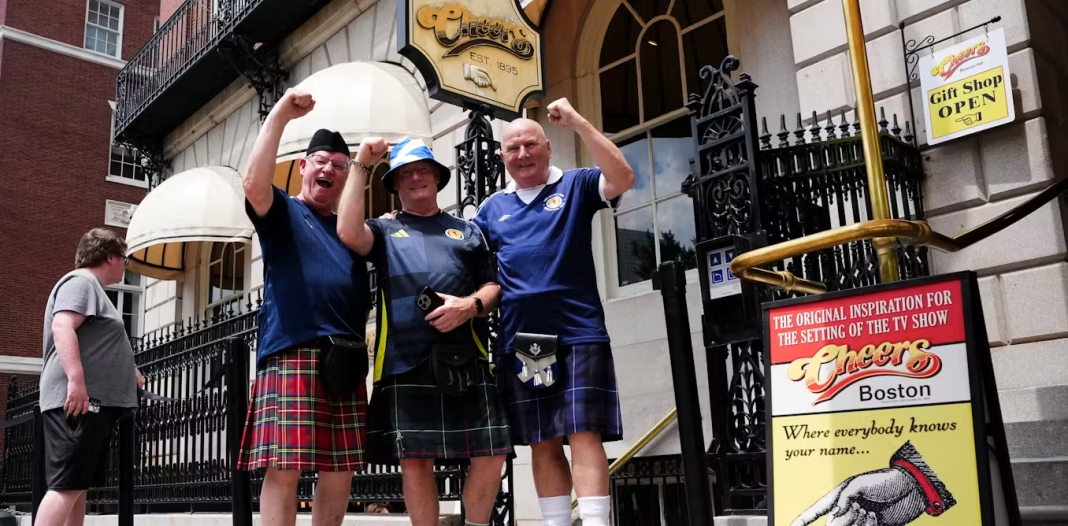
During the 2026 tournament, the warm welcome of Boston to the Scottish fans’ Tartan Army made Bostonians feel proud of their city as Scotland fans joyfully flooded the streets. And local fans in Guadalajara, Mexico, rejoiced with visiting fans from South Korea to support both teams, under the banner “Coreano Hermano” – or “Korean brothers.”

Ulises Ruiz/AFP via Getty Images
Another form of social impact is the collective effervescence fostered through event hosting. This shared sense of celebration can strengthen social cohesion in ways that are otherwise difficult to achieve. It can help break down social divisions and facilitate collective action to address issues that influence residents’ everyday lives.
A survey conducted one year after the Qatar 2022 World Cup, for example, found that both citizens and expatriates living in the country experienced stronger social connections within Qatari society, which comprises people from diverse backgrounds.
Beyond these, hosting mega-sports events can inspire residents, especially young people, to participate in sport and physical activity. They can also promote partnerships among local businesses and governments that contribute to broader community development.
As a historical example, according to research conducted by one of us, Japanese people who experienced the Tokyo Olympic Games in 1964 during adolescence reported consistently higher rates of sports participation later in life, compared with other generations. This evidence suggests that mega-sports events could promote lifelong physical activity among local youths.
The difficulty of sustaining gains
The problem with social impacts is they can be transitory and soon disappear without deliberate efforts and strategies to sustain them.
Host cities can encourage longer-term success by undertaking event-related activities after the World Cup is over so its social impact can outlive the duration of the tournament.
Implementing such efforts, however, is challenging because local organizing committees responsible for delivering mega-sports events tend to be disbanded once the events conclude. This makes it unclear who is accountable for managing the long-term social impact of event hosting during the post-event period.
Establishing organizations with a clear mandate to preserve and amplify intangible outcomes is a possible solution to this challenge. Importantly, such organizations need continuous support so their work can be sustained over a long period of time.
Although this rarely happens, there are some positive examples from past events.
For the U.S.-hosted 1994 World Cup, the U.S. Soccer Foundation was created using proceeds from the tournament. Since its establishment, the organization has implemented soccer-based programs to support the development of children from underserved communities.
In addition, the 2012 London Olympics saw the Spirit of 2012 created to keep the positive feeling from the games alive. The organization funds projects within and beyond sports to bring people together and make stronger and happier communities.
We have already seen some early signs of this for the 2026 World Cup. The organizing committee in Dallas, which hosted nine games, has formed the North Texas Sports Foundation with the aim of driving “long-term, positive regional impact through sports-driven community transformation.”
Other 2026 World Cup organizing committees have delivered legacy programs to bring social impact to local communities. However, these programs were primarily implemented before and during the tournament. Moreover, few appear to extend into the post-event period, especially given the absence of organizations that can continue them going.
If establishing a new organization is not possible, existing organizations and community groups in host cities can work together to manage the social impact of events. Such collaborative efforts could be coordinated by city or regional sport commissions, whose responsibilities include bringing sports events to communities and supporting their operations to drive community development.
While these efforts would help cities sustain and enhance the long-term social impact of mega-sports events, an important question remains: Are the events’ intangible social outcomes, such as psychic income, collective effervescence, increased sport participation and local partnerships, worth the hundreds of millions of dollars invested in hosting the event?
Drawing on available research, intangible outcomes seem to be worthwhile. Nevertheless, we believe that their value should be weighed against the financial, environmental and social burdens associated with event hosting.