

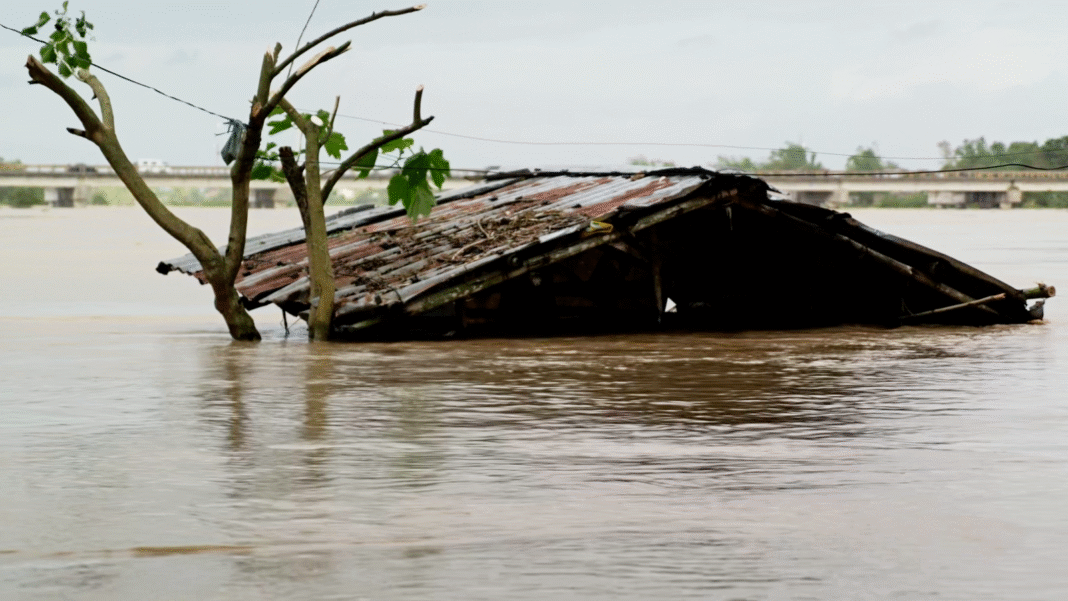

The Philippines is no stranger to storms, but this past week it’s taken an exceptional battering.
First came Typhoon Kalmaegi, killing at least 224 people. Then six days later, Super Typhoon Fung-wong.
The storm chasers who make it their life mission to track Mother Nature’s extremes were all in the province of Aurora in the northeast when it hit.
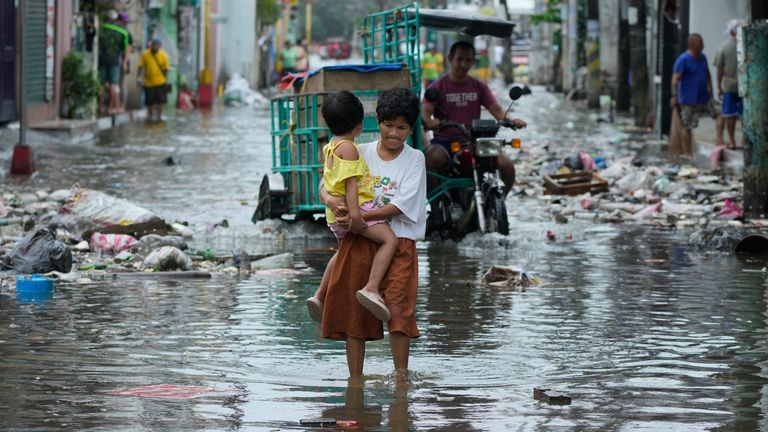
Flooding in Navotas, part of the capital Manila. Pic: AP
They captured video of huge waves hammering homes and hotels. There were winds of up to 185kph (115mph) and gusts of up to 230kph (143mph).
We were in Nueva Ecija province, in the Central Luzon region, to see the aftermath.
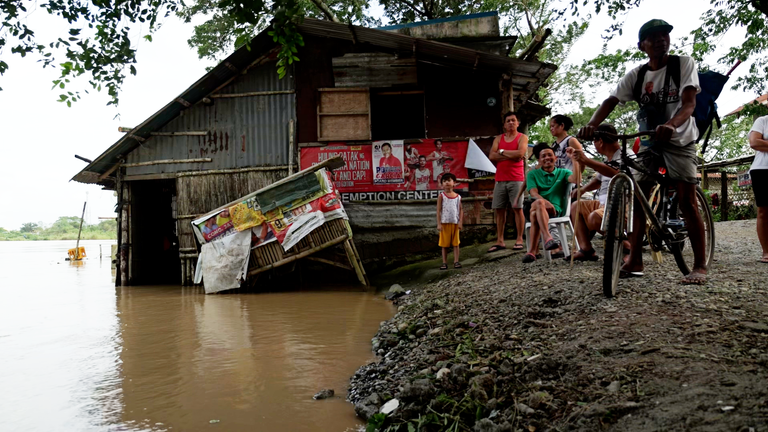
As we pulled up to one village, a cluster of people was gathered at a river that was once a road.
We were told one community had been completely cut off – 300 homes and 1,500 residents unable to get out, with conditions too dangerous for rescue teams to reach.
But many of those isolated locals told us, actually, they wanted to stay put – clinging on to their families and their belongings.
Communities in Nueva Ecija province, in Central Luzon, have been cut off
Raging rivers
They’ve seen flooding here plenty of times. And yet even the experienced look a little shocked as one man suddenly swims into view, taking on the raging river in front of us, trying to traverse wild currents to reach the isolated community.
More than 1.4 million people were evacuated due to flash flooding and landslides across the country and were placed in emergency shelters or the homes of relatives.
By Monday night, about 318,000 remained in evacuation centres.
At Nueva Ecija University of Science and Technology, we met Jennifer Amata, who fled with her five children and grandchildren – many of them crammed into a thin tent in the sports hall with her.
Locals thought they might drown
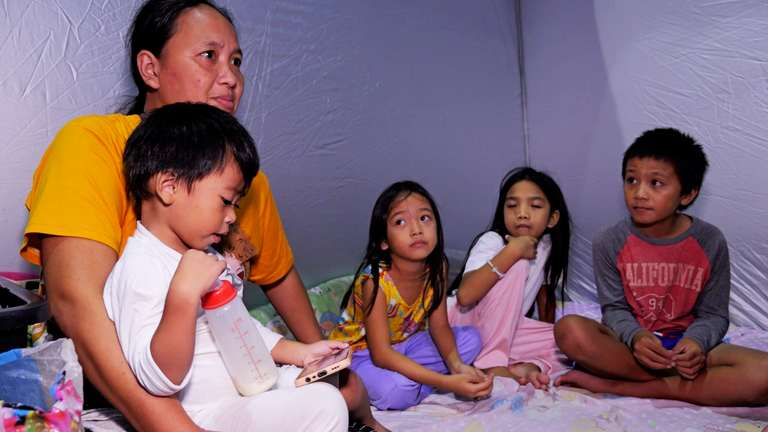
Jennifer Amata fled with her five children and grandchildren to a local university to shelter from the typhoon
“We feared for our lives”, she told us. “We feared we might drown. It’s sad and hard because we’re poor. And now that we’re flooded, we need to start all over again.”
She shows us a video of them wading through waist-deep water.
Marie Yukie Fronda also escaped, carrying her one-year-old baby. “It was very scary,” she tells me. “The impact of the wind that night was so fast and the rainfall and flooding so big.”
Read more from Sky News:
Trial begins over Christmas market attack
Nicolas Sarkozy released from prison
Olympics closer to blanket transgender ban
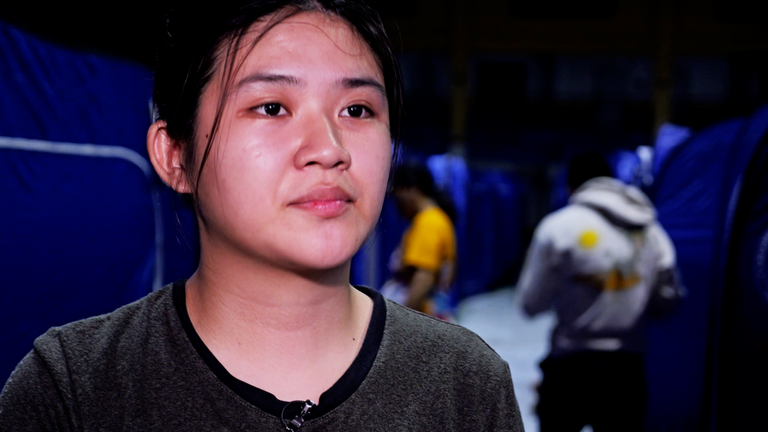
Marie Yukie Fronda escaped, carrying her one-year-old baby
The 1,800km-wide storm thankfully weakened as it raked through mountainous northern provinces and agricultural plains overnight. It’s now headed for Taiwan.
But the Philippines is still reeling from the impact on its shores.
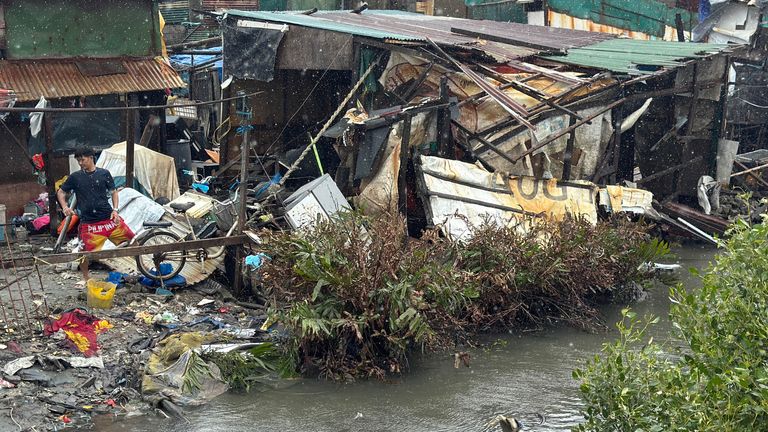
A house in Navotas has been badly damaged by the super typhoon. Pic: AP
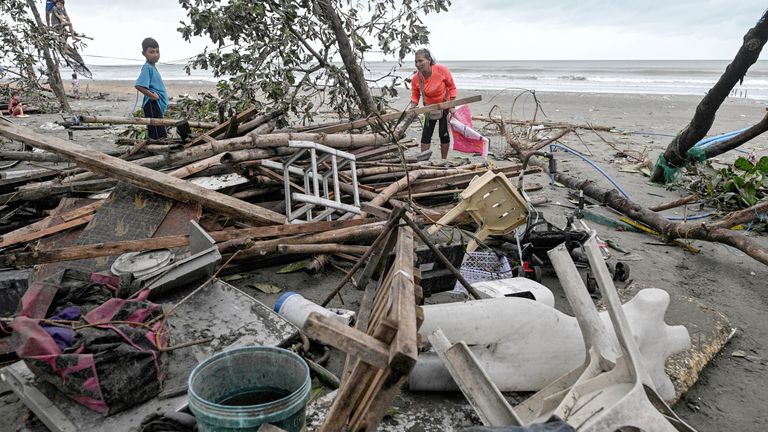
Some homes in the western coastal city of Dagupan have been torn apart by the winds. Pic: Reuters
Climate change has made extreme weather events a lot more common here. But politics is playing its part too.
There have been protests about insufficient flood defences and allegations of corruption.
In a country prone to storms, many currently feel a lot more exposed and a lot less secure.