


In recent days, Iran-backed Houthi forces have gained greater control of the Bab al-Mandeb Strait, a vital hub of trade, travel and migration between the Middle East and Africa.
The partial closing of the Strait of Hormuz as part of the war in Iran – and escalating conflicts in Yemen, Ethiopia and Eritrea – had already brought this narrow waterway into new global prominence. Control over the Bab el-Mandeb Strait remains critical to military operations and commodity markets throughout the region.
However, the Bab el-Mandeb’s strategic geopolitical and commercial shipping importance has largely overshadowed its role as a critical humanitarian corridor.
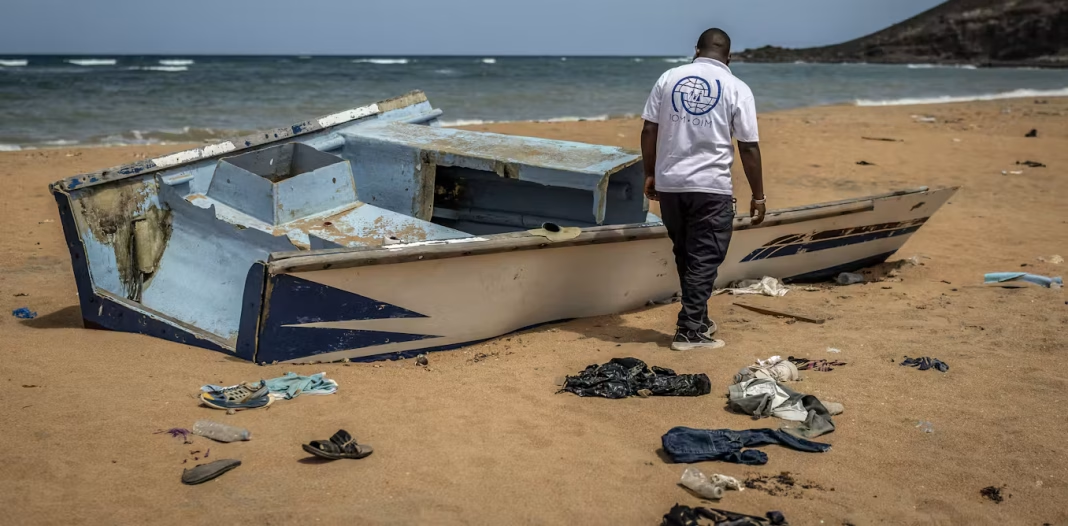
Bab el-Mandeb means “gate of lamentation” or, more poetically, “gate of tears” in Arabic. It remains one of the most dangerous migration passages in the world. Last year, more than 900 people died or went missing trying to cross. In October 2026, a boat capsized off the coast of Djibouti carrying nearly 300 people, many of whom were escaping violence and persecution.
Meanwhile, millions of people in Yemen and throughout the Horn of Africa face destitution or death without access to lifesaving deliveries of humanitarian relief supplies shipped through the strait.
Our years of research and forthcoming book “Refugees Without Refuge” demonstrate how the Bab el-Mandeb Strait is key to the lives of millions of people throughout the region seeking safety, opportunity and humanitarian assistance. Protecting the safe movement of people and goods through the strait is key to averting future tragedies.
A corridor for travel, trade and escape
Located at the southern mouth of the Red Sea, between the arid coastlines of Eritrea, Djibouti and Yemen, the Bab el-Mandeb Strait connects the Indian Ocean to the Red Sea and Suez Canal. On a clear day along the wide beaches and mangrove forests on the coast of Djibouti, you can see the sandy hills on the shores of Yemen, only about 20 to 30 miles away. On starry nights, the scattered lights of coastal towns twinkle across the waters.
For centuries, passage through the Bab el-Mandeb Strait has been vital to global trade in salt, spices, coffee, livestock and other goods. Religious pilgrims, travelers, migrants and traders have long used the strait for relatively easy transport between continents.
Today, people crossing the strait are also escaping poverty, war, political persecution, disasters and gender-based violence.
Hot, tired, financially depleted and frequently sick or injured, refugees and migrants traverse the Bab el-Mandeb at all hours.
Most negotiate passage across the strait on derelict boats with “delalas” – facilitators, brokers or smugglers – in the shadows of coast guard and police patrols and outside United Nations and governmental migration controls.
The numbers of people crossing the strait are difficult to estimate. Between January and August 2026, the U.N.’s International Organization for Migration recorded 122,258 arrivals to Yemen from the Horn of Africa – even more than had crossed by that time in 2025. Most of these migrants were from Ethiopia, and most traveled without passports or visas.
Since August, displacement and insecurity throughout the region has worsened, making accurate figures for the numbers of people migrating and the numbers of people dying trying to cross impossible to estimate.
A lifeline for those escaping conflict
Despite the dangers of this crossing, the Bab el-Mandeb Strait remains an economic lifeline for millions of people living in Ethiopia, Kenya, Somaliland, Somalia and elsewhere who rely on commercial goods imported from the Middle East and Asia. However, the Houthi forces in charge of increasing swaths of southwestern Yemen now control most critical ports and islands in the strait, increasing the risks and costs of transit and trade.
The strait has either been closed or has become a bottleneck, allowing only limited shipping traffic since September 2026. Many cargo ships have been delayed or rerouted, causing businesses in fragile regional economies to pass higher transport and fuel costs on to their customers.
The economic effects of costly and delayed shipping and trade through the strait has compounded the broader effects of increased violence and displacement throughout the region. In front of the U.N. General Assembly on Sept. 26, 2026, Djibouti foreign minister Abdoulkader Houssein Omar expressed “grave concern” about the sudden influx of Yemeni refugees putting a strain on underresourced coastal towns and refugee camps. The United Nations relief agency, UNHCR, is reporting an outbreak of cholera in the Markazi refugee camp, the primary home to thousands of Yemenis who have fled across the strait into northern Djibouti.

Luis Tato/AFP via Getty Images
On top of that, the potential for a return to civil war in Ethiopia, and the potential involvement of Eritrea in regional conflicts, may increase population displacement and further disrupt economic markets on both sides of the strait.
As each of these conflicts unfolds, additional pressure will likely be put on the Bab el-Mandeb Strait. It provides the only feasible passage for many people seeking safety and opportunity abroad.
A humanitarian corridor
Keeping the Bab el-Mandeb open and safe is also vital for the delivery of humanitarian aid. Like challenges of commercial shipping, the maritime transit of relief supplies, including food and medicine, has been undermined by security risks, shipping delays and the rising costs of food and fuel.
UNICEF’s latest situation report for Somalia, published in August 2026, estimates that nearly 5 million people there are in urgent need of humanitarian assistance. At least another 5.5 million people in Ethiopia are also in need, due to the effects of conflict combined with below-average rainfall linked to El Niño.
In Yemen, an estimated 321,000 people have been displaced since Aug. 1, 2026, and ongoing water scarcity combined with conflict has left 17 million people without access to clean water, sanitation and hygiene services. As casualties mount and cholera spreads, hospitals have struggled to obtain essential supplies.
The Bab el-Mandeb Strait sits at the center of all of these crises. It remains a vital human and humanitarian corridor for millions of people needing refuge and relief. It is a lifeline as much as a geopolitical and economic linchpin.
Ensuring the safe passage of people and supplies of humanitarian relief through these waters is necessary to save lives and protect precarious livelihoods throughout the region.